If you've spent any time browsing Dubai Property Market mortgage trends in 2026, you've probably noticed that every lender claims to have the "lowest" mortgage rate in the country. The bank with the best mortgage rates UAE-wide depends on your residency status, your salary transfer arrangement, your loan-to-value ratio, and whether you want a fixed or variable structure.
If we plan to do a mortgage rate forecast as of mid-2026, most competitive starting rates cluster around 3.24% – 5%, with several banks like First Abu Dhabi Bank (FAB), Emirates NBD, RAKBank, and HSBC UAE fighting hard for the top spot. This guide breaks down how fixed vs variable rates compare, what EIBOR has to do with your monthly payment, home loan rates UAE, and how to actually qualify for the best mortgage rates Dubai and the broader UAE have to offer today.
Mortgage Rates UAE 2026

For buyers who are wondering what the best time to Buy Property in UAE 2026 is, it's worth understanding where UAE mortgage rates today actually sit. Average mortgage interest rate in Dubai for residential properties currently ranges between roughly 3.49% and 4.99%, having eased over the past 12–18 months on the back of US Federal Reserve rate cuts, since the dirham's peg to the dollar means UAE borrowing costs largely track US monetary policy. Commercial property mortgages sit even higher, generally above 6%, reflecting the additional risk lenders attach to non-residential lending.
Industry-wide, mortgage rates UAE lenders advertise typically fall in the 3.9% – 5.5?nd, with the lowest introductory fixed rates that are often reserved for salary-transfer customers with strong credit profiles sitting in the high 3% range. Variable products, which move with the Emirates Interbank Offered Rate (EIBOR), can be cheaper or more expensive than fixed offers depending on where EIBOR sits at any given moment. The EIBOR rate today refers to the daily benchmark published by the Central Bank of the UAE, and is dependent on the UAE Central bank investment rate today.
UAE Banks with the Best Mortgage Rates
There isn't one single "winner" because each bank's lowest rate comes attached to conditions like salary transfer, minimum income, LTV cap, or customer tier (e.g., Premier banking). But based on currently advertised starting rates, here's how the major UAE banks stack up.
First Abu Dhabi Bank (FAB)
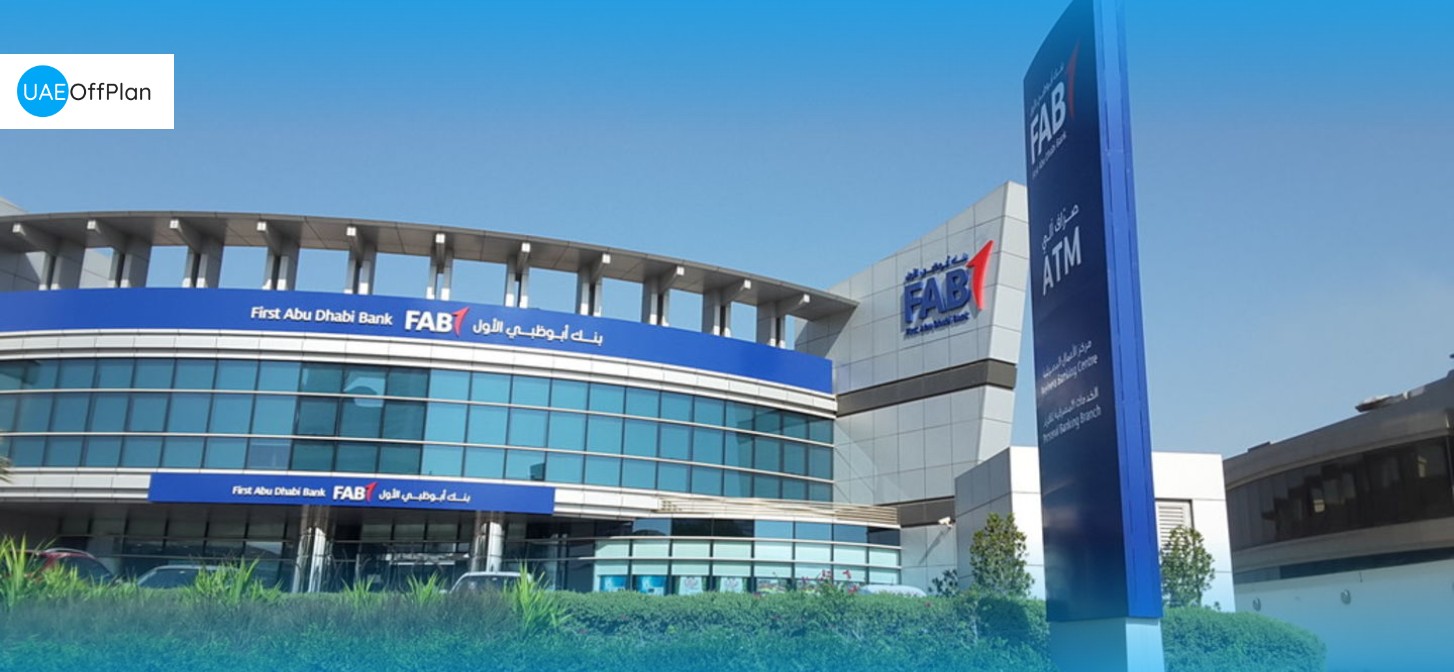
FAB advertises some of the most aggressive FAB home loan rates in the market. Its fixed mortgage rates start from around 3.99%, with fixed-rate tenures available up to five years. First-time buyers can access up to 85% financing, and FAB also offers no approval-in-principle fee, salary-transfer cashback offers, and grace periods on first installments. For buyers focused purely on the lowest headline number, FAB is frequently the bank to beat.
Emirates NBD
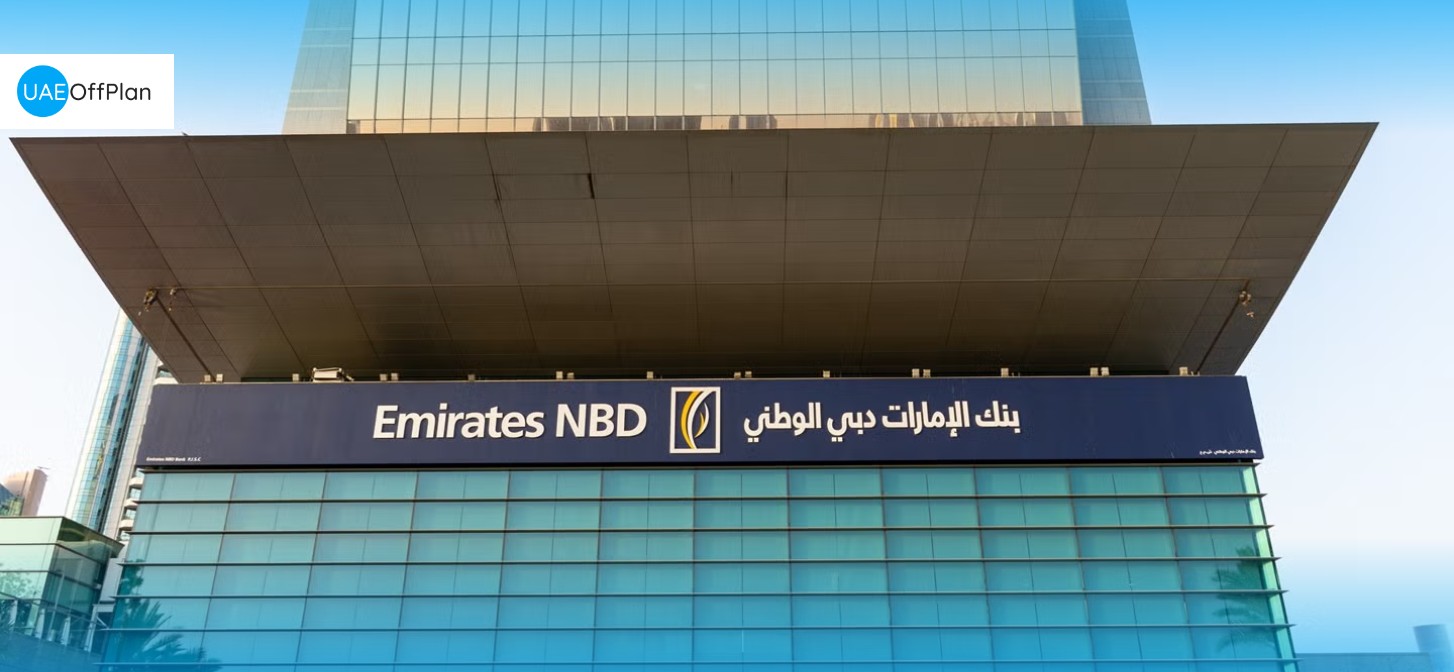
Emirates NBD mortgage rates in Dubai are competitive across a wide product range, from home loans for expatriates to self-construction financing for nationals. Indicative fixed rates generally start around 3.99% – 4.99?pending on the fixed-rate period chosen. Emirates NBD allows expatriates to finance up to 80% of the property value and offers loan amounts up to AED 25 million, with terms up to 25 years. Its government housing programmes like the 0% interest financing up to AED 800,000 for eligible UAE nationals, are a standout feature you won't find replicated everywhere.
HSBC UAE

HSBC UAE mortgage rates are structured around two core product lines: a Variable 3-month EIBOR Home Loan and a Fixed-Rate Mortgage. The variable product combines a fixed HSBC margin (representative example: 1.19%) with the prevailing three-month AED EIBOR, meaning your total rate moves up or down as EIBOR is reviewed quarterly.
HSBC Premier customers benefit from discounted home loan rates compared with standard personal banking customers, and non-resident buyers can also apply, though pricing differs. HSBC's standard arrangement fee is 1% of the loan (reduced to 0.5% for Premier/Private Bank customers), and early settlement charges apply within the first three years.
ADCB Mortgage Rates

ADCB offers one of the best mortgage rates which commonly start around 3.99% for initial fixed periods, with both Islamic and conventional home finance options. ADCB's Standard Mortgage Loan offers a hybrid structure (fixed initially, then variable) or a pure variable structure based on EIBOR plus margin. Financing goes up to 85% for UAE nationals, 80% for expatriates, with repayment terms up to 25 years for residents.
Mashreq Mortgage Rates
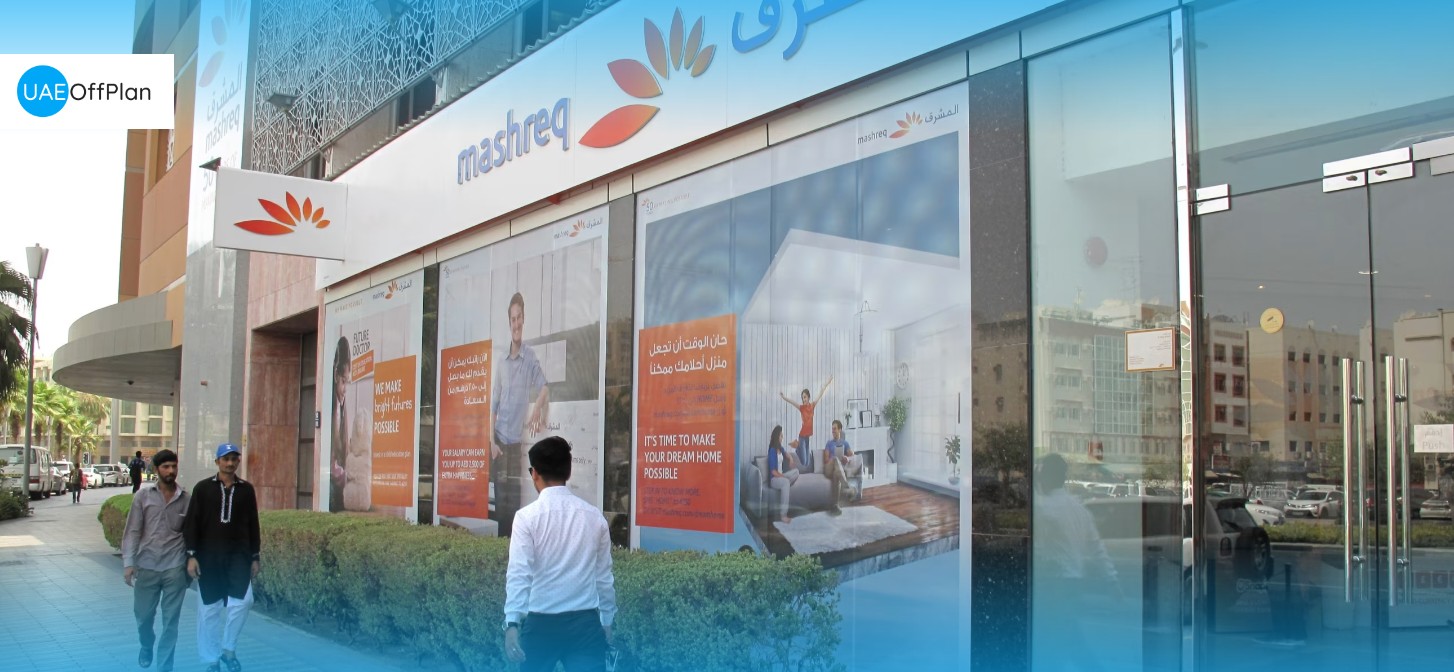
Mashreq mortgage rates typically start from around 4.10%–4.49%, with variable options tied to EIBOR plus margin. Financing goes up to 80%.
Dubai Islamic Bank Home Finance Rates
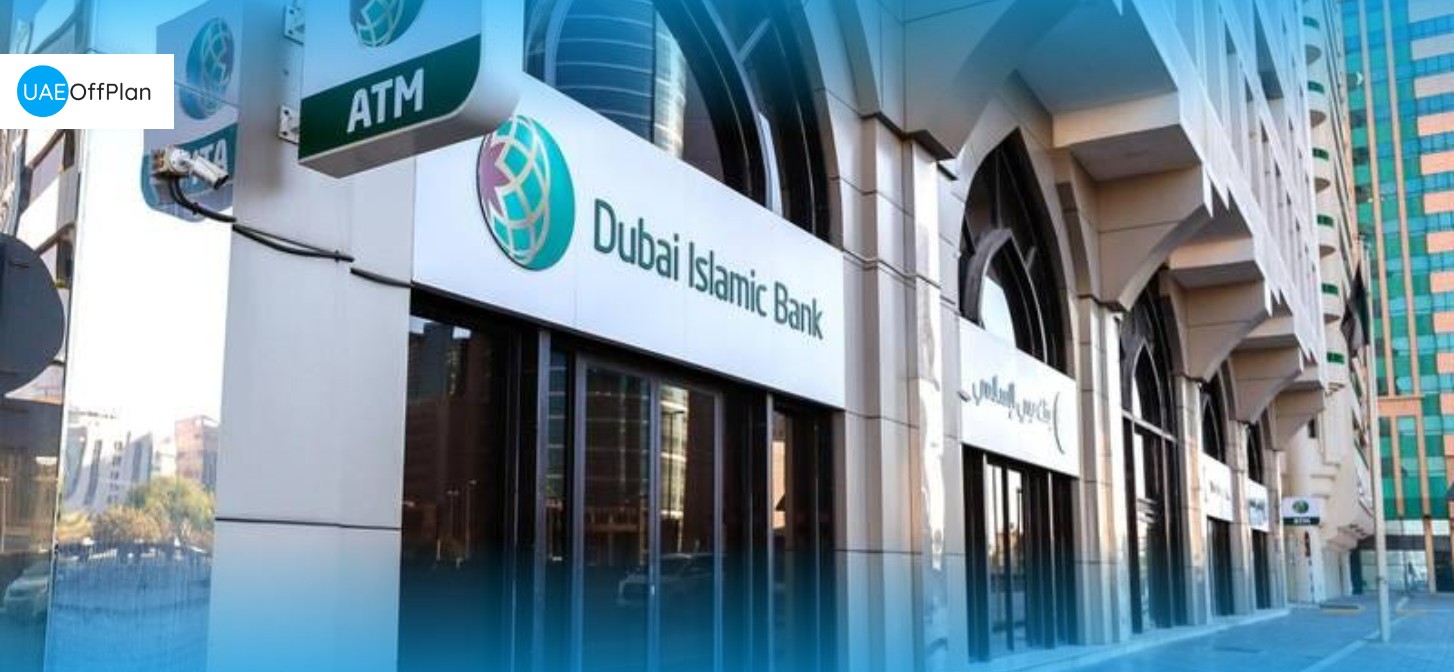
For buyers seeking Sharia compliant mortgage UAE solutions, Dubai Islamic Bank home finance rates are among the most established in the market. DIB's profit rates have been advertised from roughly 3.24% – 3.49?pending on the product and fixed period, with options ranging from 1, 3, and 5-year fixed introductory profit rates through to fully variable EIBOR-linked structures via Ijarah contracts. Financing reaches up to 85% for UAE nationals and 80% for expatriates, and salary transfer is not mandatory for some products. This is a meaningful advantage for self-employed or non-resident buyers.
RAK Bank Home Loan
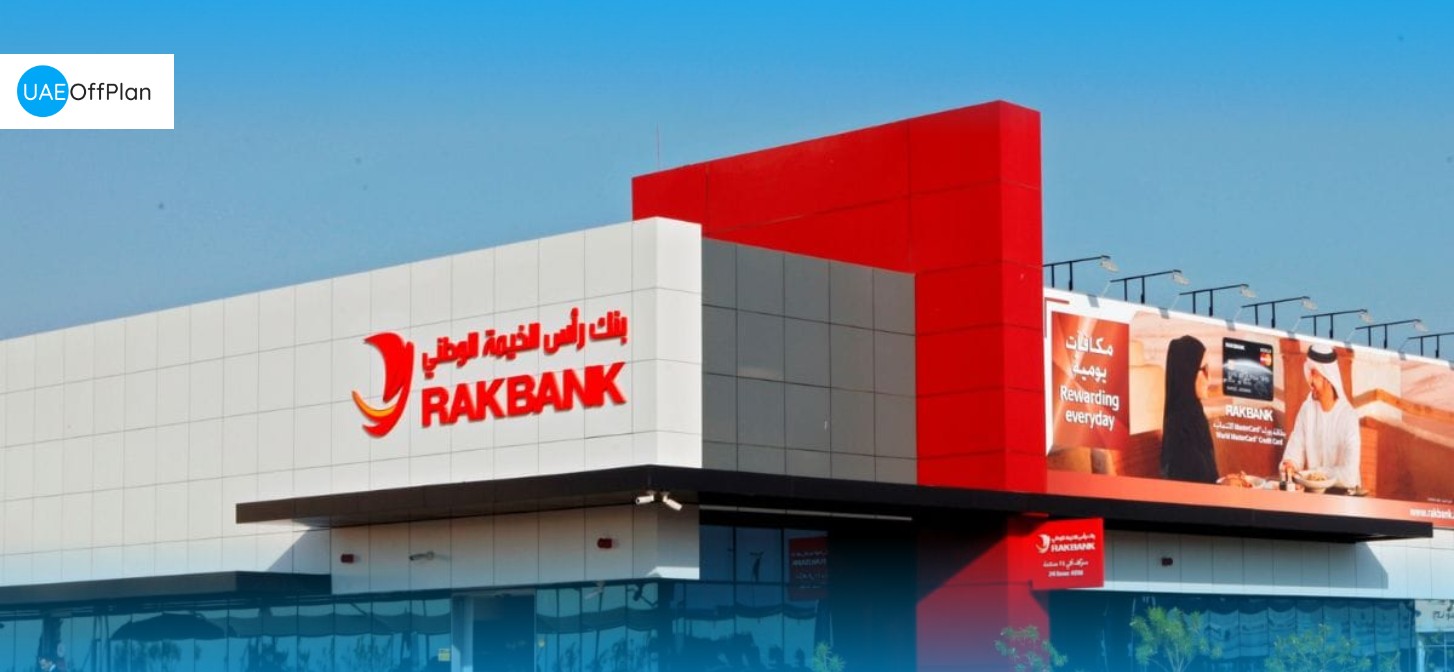
RAK Bank UAE home loan rates start from around 3.89%–4.99% (reducing rate p.a.) on products fixed for five years, depending on the specific scheme (standard Home Loan, Home in One offset-style loan, or the Ras Al Khaimah-only Green Home Loan for BARJEEL-certified properties). RAKBank's offset "Home in One" product is genuinely distinctive, because the more cash you keep in a linked current account, the less interest you pay, since interest is only charged on the net outstanding balance.
Sharjah Islamic Bank Mortgage Rate
For buyers specifically targeting properties in the Northern Emirates, Sharjah Islamic Bank mortgage rate products are worth comparing directly with a broker, as published rates for these smaller lenders fluctuate more frequently and are less consistently advertised online than those of the larger national banks. The bank offers Sharia-compliant home finance with profit rates generally in a similar band to the bigger Islamic banks, though eligibility criteria and maximum loan amounts can be more restrictive.
National Bank of Fujairah Islamic Home Finance
National Bank of Fujairah Islamic home finance options are also less consistently advertised online than those of the larger national banks. It also offers Sharia-compliant home finance with profit rates generally in a similar band to the bigger Islamic banks.
Types of Mortgages in UAE
This is one of the most important decisions you'll make, and it's worth taking seriously rather than just chasing the lowest headline number.
Fixed Mortgage
A fixed mortgage rate UAE product locks your interest rate for a set period, which is typically one to five years. During that window, your monthly payment doesn't change regardless of what happens to EIBOR or the wider interest rate environment. Once your fixed term ends, your rate usually reverts to a (often higher) variable rate, and you won't benefit if market rates fall during your fixed period.
1 Year Fixed Mortgage UAE vs 3 Year Fixed Mortgage UAE
- Shorter fixed terms, such as a 1 year fixed mortgage UAE product, generally carry the lowest advertised starting rates because the bank is taking on less long-term interest-rate risk. The downside is that you'll need to renegotiate or revert to variable sooner, exposing you to potential rate changes within just 12 months.
- A 3 year fixed mortgage UAE product offers a longer runway of payment certainty, usually at a slightly higher rate than a 1-year fix but typically lower than a 5-year fix, making it a popular middle-ground choice for buyers who plan to stay in the property for several years but aren't ready to commit to a decade-long financial plan.
Variable Mortgage
A variable mortgage rate UAE product, by contrast, is tied directly to the EIBOR mortgage rate and a fixed bank margin. This is often referred to as an EIBOR + margin mortgage. If EIBOR falls, your payments fall with it and if EIBOR rises, so do your payments.
Hybrid Structures
Hybrid structures are fixed mortgages for an initial period (commonly two years), then reverting to variable. These are increasingly popular among UAE lenders as a middle ground, offering short-term certainty with long-term flexibility.
Islamic Home Finance UAE
Islamic home finance UAE products, offered by Dubai Islamic Bank, Emirates Islamic, Abu Dhabi Islamic Bank, Sharjah Islamic Bank, and others, avoid charging interest (riba) and instead use profit-based structures such as Murabaha (cost-plus sale) or Ijara (lease-to-own). In practice, the bank purchases the property and either sells it to you in installments at an agreed profit margin, or leases it to you with ownership transferring at the end of the term.Pricing-wise, a sharia compliant mortgage UAE product is generally comparable to conventional mortgages.
Salary Transfer Mortgage
A salary transfer mortgage UAE arrangement is where your monthly salary is paid directly into an account with your mortgage lender. It is one of the most reliable ways to access a bank's lowest advertised rate.
UAE Mortgage Qualification Criteria
Before you think of securing a competitive mortgage rate in UAE today, you should understand the qualification criteria that will enable you to compile the necessary papers. Here’s what you need to know.
For Expats
- Minimum monthly compensation AED 10,000-15,000.
- Job History:6-12 months current employment
- Credit score: Etihad Credit Bureau score of 650+
For UAE Citizens
- Salary thresholds may be lower.
- Similar credit and employment verifications.
General Lending Regulations
- Your total monthly loan payments (including the new mortgage) shouldn't be more than 50% of your income.
- Should have a clean credit history and a stable income.
Required Documents
To speed up the process, please have the following documents ready:
- Valid Passport & Emirates ID.
- Residence permit
- Recent pay stubs and bank account statements.
- Letter of employment on company letterhead.
- Tenancy Agreement or Ownership Document of property.
- For the self-employed: trade license, audited financial statements, proof of income.
Criteria for Loan-to-Value and Down Payment
- Lenders decide how much you can borrow based on your profile.
- UAE Nationals: Eligible for up to 85% of property value.
- Generally up to 80% are allowed for expats.
- For residential houses, the down payment is usually 15-20%, and for commercial or investment loans, it is higher.
Tip: Make an advance payment as it is an important criteria for approval.
What Happens After You Apply?
- The bank will look at how well you can repay and your credit history.
- If you qualify, you will receive a formal offer
- Take the offer from the bank and seal the deal and register the mortgage to finalize the property.
How to Get the Lowest Mortgage Interest Rate in Dubai
Securing the lowest mortgage interest rate UAE banks can offer isn't about luck, it's about positioning yourself as the lowest-risk borrower possible and then comparing aggressively. Here's what you need to do:
1. Build and Protect your Credit Score
In the UAE, a good Al Etihad Credit Bureau score is generally considered to be 680 or above; below 620 makes securing a competitive rate, or any mortgage at all, considerably harder. Pay bills on time, reduce high-interest debt, and keep credit utilisation low well before you apply.
2. Maximize your Down Payment
A larger down payment lowers your loan-to-value ratio, which directly improves the rate you're offered. Where possible, aim above the regulatory minimum.
3. Transfer your Salary to the Lending Bank.
As covered above, this alone can shave a meaningful amount off your headline rate.
4. Compare Offers across Multiple Banks
The rate a bank advertises publicly is rarely the rate you're actually offered after underwriting. Your real, personalised rate depends on income, credit history, employer, and loan size.
5. Work with a Mortgage Broker
An experienced, independent mortgage broker is someone professionals in Dubai trust to do things like simultaneously compare offers from multiple lenders, negotiate on your behalf, and flag products (like cashback offers or fee waivers) that aren’t always obvious from a bank’s public rate card.
6. Use Rate-lock Windows Wisely
Many banks allow you to lock in a rate during pre-approval for 60–90 days, protecting you from rate movement while you finalise your property search.
7. Get Pre-approved early
A mortgage pre-approval UAE certificate not only makes clear what you can realistically borrow, but also sends a clear message to sellers and agents that you are a serious qualified buyer.
How Much Can You Borrow?
Most lenders cap total monthly debt obligations, including your new mortgage, at around 40–50% of gross monthly income. To estimate your realistic borrowing power, every major bank publishes a mortgage calculator UAE tool on its website. These let you input salary, existing liabilities, property value, and tenure to get an indicative loan amount and monthly installment. As a rough industry rule of thumb, many buyers can borrow roughly five to six times their gross annual income, though this varies significantly by bank, loan term, and interest rate environment.
What is Mortgage Refinancing UAE?
If you already own a mortgaged property, mortgage refinancing UAE, which is also called a buy-out or balance transfer, lets you move your loan to a new lender offering better terms. This makes sense if current market rates have dropped meaningfully below your existing rate, if your credit profile has improved since you first borrowed, or if you simply want to release equity for renovation or investment. Ask your current bank for a liability letter, including your outstanding balance and any early settlement penalty. Calculate a realistic break-even point by comparing the total cost of switching (legal fees, valuation fees, registration fees and the bank’s arrangement fee) to your projected interest savings.