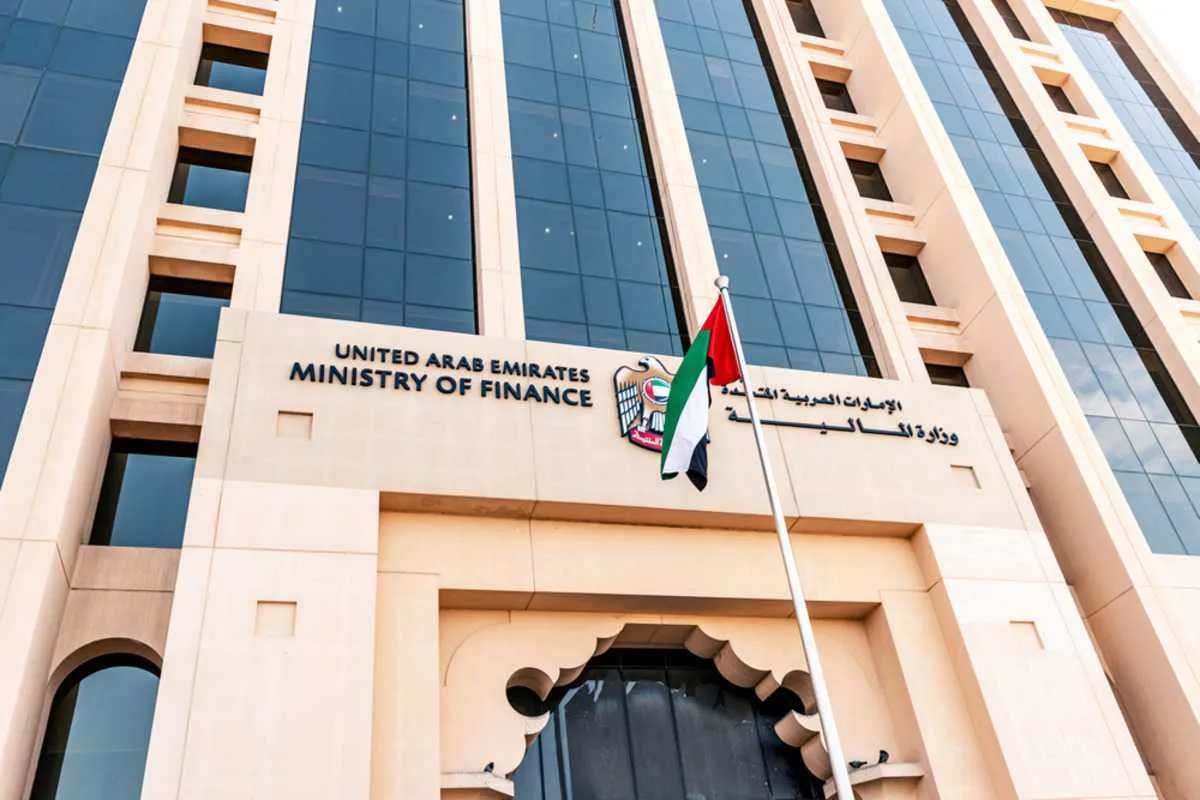
For many decades, sovereign debt instruments in the UAE have, on the whole, remained the preserve of institutional investors, banks, and large funds. Government Sukuk, the Sharia-compliant equivalent of bonds, were issued in big-ticket sizes. These were meant for sophisticated buyers and didn't include the average resident wondering where to put their savings. That changed on June 17, 2026, when the Ministry of Finance announced the launch of the inaugural Sovereign Retail T-Sukuk Programme. This is a Shariah-compliant investment instrument that is offered through an IPO-style subscription framework.This framework is similar to the one adopted by the Dubai Financial Market and Nasdaq Dubai.
For the first time, ordinary citizens and residents of the Emirates can buy a slice of UAE government debt with an entry point low enough to be actually accessible. This entry point is decided to be just Dh1,000.
What Is a T-Sukuk?
To understand why this launch matters, it helps to understand what a T-Sukuk actually is. A T-Sukuk is a type of Sharia-compliant government investment certificate. The "T" here refers to the Treasury, meaning it is issued by a government treasury.In this case, the treasury is the UAE Ministry of Finance. Functionally, it works similarly to a government bond, but is made to comply with Islamic finance principles. Islamic principles prohibit interest-based returns (riba). Instead of Riba, they generate income through asset-backed or profit-sharing structures.
This isn't the UAE's first foray into Islamic treasury instruments, but it is the first one designed specifically for retail investors rather than institutions. The federal government has been building out its local-currency debt market over the years, and this retail product represents the next logical step into turning a wholesale government financing tool into something an individual saver can actually use.
Why did the Ministry of Finance Build This Programme?
The reasoning behind the launch goes beyond just adding another investment product to the shelf. According to the Ministry, the programme wants to broaden participation in government investment instruments and enable individuals and families to access investment opportunities backed by the UAE Government. There's also a clear policy in the announcement, which is that the programme is designed to promote financial inclusion, create a culture of long-term saving and investing, and is aligned with the UAE's "Year of Family 2026" initiative. This initiative seeks to build a more financially aware society.
This means that the government is not positioning the T-Sukuk only as a yield product, the government is actually tying it to a broader social and economic goal, which is getting more residents into the habit of saving and investing for the long term. This is why the government is using an instrument that's secure and culturally aligned with the values of a large segment of the population.
Mohamed bin Hadi Al Hussaini, Minister of State for Financial Affairs, mentioned this dual purpose when he described the programme's intent. As he put it, "The Sovereign Retail T-Sukuk Programme reflects the Ministry of Finance's commitment, in collaboration with the Central Bank of the UAE (CBUAE), to developing innovative financial instruments that align with the aspirations of society and contribute to a more diversified, resilient, and sustainable economy". He further noted that the initiative is meant to encourage saving, financial planning, and long-term investment among individuals and families. This also positions everyday residents as active participants in the country's economic development rather than passive observers of it.
Also, don’t overlook the market-development angle here.The Ministry emphasised that it wants to advance local capital markets and strengthen the UAE's leadership as a global financial hub that offers innovative and diversified investment solutions, while also supporting the development of a more inclusive, competitive, and future-ready financial ecosystem. In other words, this is as much about deepening the UAE's domestic capital markets as it is about giving individuals a new savings option.
The Low Entry Price
The headline figure here is the minimum subscription amount, which is Dh1,000. That's a very low bar in a market where many investment products require five- or six-figures at least.
This accessibility is the entire point. This program is tailored specifically for individuals across the UAE. It introduces a secure government-backed investment instrument with a minimum subscription amount of AED 1,000. It offers investors risk-free returns on the T-Sukuk within a transparent and well-regulated investment framework. This instrument is backed directly by the UAE Government's treasury, which means that the credit risk is effectively sovereign risk. This is about as low as risk gets in any market.
The Subscription Process
The programme is being introduced through an IPO-style subscription framework. This framework is very similar to the approach used by the Dubai Financial Market and Nasdaq Dubai. In short, it means that investors won't be negotiating directly with the Ministry of Finance. Instead, investors will be able to subscribe through the participating banks' digital platforms and dedicated subscription channels.
The Ministry has also given specific banking partners to handle this. The programme is being launched in collaboration with Emirates NBD, which is appointed as the Lead Receiving Bank. The list also includes Emirates Islamic Bank, Abu Dhabi Islamic Bank, Ajman Bank, and Mashreq Bank. These banks will serve as receiving banks for subscriptions. The presence of both conventional banks (Emirates NBD, Mashreq) and Islamic banks (Emirates Islamic, ADIB, Ajman Bank) in this lineup clearly shows the Ministry's intent to make them accessible across the UAE's diverse banking industry.
The Ministry has not yet announced the exact subscription dates, application links, required documents, or the detailed steps for investors.
Can You Sell It Before Maturity?
This instrument is attractive to investors because of its liquidity. Once the Sukuk are issued, they are expected to be listed on Nasdaq Dubai, allowing investors to trade them in the secondary market after completion of the offering and allocation process. It means investors will have the option to trade their holdings in a regulated marketplace.Nasdaq Dubai will act as the central securities depository and provide the settlement platform for the Sukuk.
The structure promises potential risk-free returns on the T-Sukuk within a transparent and well-regulated investment framework. In Islamic finance terminology, returns on Sukuk are typically referred to as "profit rates" rather than "interest rates," because the underlying structure involves a share in the returns generated by an underlying asset or project, instead of a straightforward interest payment.
Next Steps
- The Ministry has committed to releasing the profit rate, tenor, and exact subscription window within the week following the June 17 announcement.
- The application process itself will run through the five receiving banks' digital platforms.
- Once subscriptions open and the first issuance is allocated, the listing will be on Nasdaq Dubai and become tradeable.
Conclusion
Gulf governments have increasingly been looking for ways to deepen local capital markets, reduce reliance on foreign capital, and encourage their own citizens and residents to participate themselves in national economic growth instead of using all their savings into foreign assets, real estate, or simple bank deposits.For residents specifically,the inclusion of "residents" alongside "citizens" in every official statement about this programme is notable. It shows an intentional choice to make this an inclusive financial product rather than a citizens-only benefit.